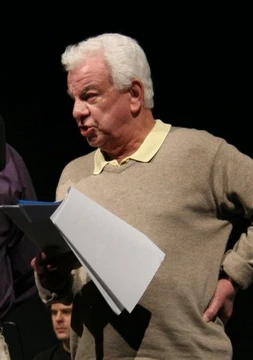
Russ Meyer
Filmmaker known for sexploitation films and collaborations with Roger Ebert.

Aaron Gustafson · CC BY-SA 2.0
Russ Meyer was an American filmmaker and photographer, known for directing sexploitation films featuring large-breasted women. He collaborated with film critic Roger Ebert on several films, including *Beneath the Valley of the Ultra-Vixens*, which starred Kitten Natividad. Meyer paid for Natividad's second breast enhancement and voice lessons, and they lived together as a couple for most of the next 15 years.
- field
- Filmmaker, photographer
- nationality
- American
Verified Timeline
Lore & Background
Russ Meyer was introduced to Kitten Natividad by fellow dancer Shari Eubank, a performer in Meyer's 1975 film *Supervixens*. Meyer hired Natividad to narrate his movie *Up!*, where she was shown sitting nude in a tree, quoting the poetry of H.D., and acting as a Greek chorus. Meyer was so impressed he wanted her to star in his next feature, *Beneath the Valley of the Ultra-Vixens*, one of several collaborations between Meyer and film critic Roger Ebert. Meyer paid for a second breast enhancement and voice lessons to eliminate her accent. Natividad left her husband for Meyer during the filming, and they lived together as a couple for most of the next 15 years. Although they never married, they lived together for some 15 years. Meyer's films also featured other 'repertory' stars such as Haji (from *Faster Pussycat! Kill! Kill!*) and Raven De La Croix (from *Up!*).
Reader's Guide
Russ Meyer's significance in Kitten Natividad's career is central: he cast her in *Up!* and *Beneath the Valley of the Ultra-Vixens*, the latter co-written with Roger Ebert. Meyer's financial support—paying for breast enhancement and voice lessons—directly shaped her on-screen persona. Their 15-year relationship, though never formalized as marriage, was a defining personal and professional partnership. Meyer's films also created a repertory company of performers, including Haji and Raven De La Croix, who later reunited with Natividad in *The Double-D Avenger*. The source does not provide details on Meyer's earlier career, his filmography beyond these collaborations, or his broader influence on cinema.
Did You Know?
- Russ Meyer paid for Kitten Natividad's second breast enhancement and voice lessons to eliminate her accent.
- Meyer and Natividad lived together as a couple for most of 15 years, though they never married.
- Meyer's film *Up!* featured Natividad sitting nude in a tree, quoting the poetry of H.D. as a Greek chorus.
- Meyer collaborated with film critic Roger Ebert on *Beneath the Valley of the Ultra-Vixens*.
- Meyer was introduced to Natividad by fellow dancer Shari Eubank, who had performed in his 1975 film *Supervixens*.
From Juárez to the Go-Go Stage
Francesca Isabel Natividad entered the world on February 13, 1948, in Ciudad Juárez, the eldest of nine siblings in Chihuahua State. English remained foreign to her until age ten, when her mother wed an American citizen and the family relocated to Texas. She proved academically capable, serving as senior class president at Ysleta High School in El Paso. A later move to California set her on a very different trajectory: she scrubbed floors and cooked meals for actress Stella Stevens, then punched keys at IBM, before finally taking to the go-go stage to earn a living. It was in that world of dance floors that she shed her given name and embraced "Kitten," a moniker she attributed to her own shyness. In 1969, at twenty-one, acting on her agent's recommendation, she traveled to Tijuana—where the procedure was legal—and underwent her first breast augmentation, a decision that would define her public image for decades to come.
The Meyer Connection and the Road to Fame
A fellow go-go dancer named Shari Eubank, who had performed in Russ Meyer's 1975 film Supervixens, was the bridge that connected Natividad to the cult director. Meyer cast her as the narrator in his 1976 feature Up!, a role in which she perched nude atop a tree, reciting the poetry of H.D. and serving as a Greek chorus to the film's absurd proceedings. Impressed by what he saw, Meyer greenlit her for the lead in Beneath the Valley of the Ultra-Vixens, a project that also involved film critic Roger Ebert. He bankrolled a second breast enhancement and arranged voice coaching to smooth out her accent. During the shoot, Natividad left her husband and began a fifteen-year domestic partnership with Meyer. After that film, she pivoted toward glamour and girl-girl modeling, working alongside names like Candy Samples and Uschi Digard, which multiplied her dancing earnings. Her stage act incorporated an oversized champagne glass and Bobby Darin's "Splish Splash," and she became a familiar face on Chuck Barris's game shows, including The Dating Game.
Pop Culture Crossover and the 1980s
By the 1980s, Natividad had progressed from topless appearances to full hardcore performances, often paired with younger partners, a choice that drew sharp criticism from fellow burlesque artists. She also launched her own private photo and video studio, The Kitten Klub, though its website eventually shut down. Her visibility in mainstream pop culture remained striking: she performed as a stripper at the bachelor party Sean Penn threw ahead of his 1985 wedding to Madonna, and the year prior she had played a dancer in The Wild Life, a film starring Penn's brother Christopher. Television kept calling her back—The Gong Show in the late 1970s, The $1.98 Beauty Show, and a 1980s music video for Mitch Ryder's rendition of Prince's "When You Were Mine." In 2001 she reunited with two other Meyer alumni, Haji and Raven De La Croix, in the cult comedy The Double-D Avenger, playing Chastity Knott, a busty costumed crime fighter. A 2006 Playboy spread titled "The History of Bikinis" kept her in the public eye well into her fifties.
Health, Later Years, and Passing
Natividad and Meyer shared a home for roughly fifteen years but never tied the knot. In October 1999 she underwent a double mastectomy to treat breast cancer, and the surgery revealed a startling fact: the silicone from her 1969 augmentation was industrial grade rather than the surgical grade she had been told. She followed up with reconstructive surgery that restored her bust to a size close to its former dimensions. In her later decades she lived modestly and alone, keeping a pit bull and three cats for company—animals who got their own spotlight in the 2005 documentary Pornstar Pets. She sustained herself through ongoing video sales and phone-sex work, and still accepted film roles, including a part in Adam Rifkin's A Night at the Golden Eagle, a project Rifkin said he secured after recognizing her at a traffic light twenty-five years earlier. On September 24, 2022, kidney failure claimed her life at Cedars-Sinai in Los Angeles. She was seventy-four, survived by her sister Eva, her mother, four nephews, and a niece.
Gallery
Frequently Asked Questions
Who is Russ Meyer?
Russ Meyer was an American filmmaker and photographer who became famous for directing a string of campy sexploitation comedies in the 1960s and 1970s. He is widely regarded as a one-man auteur who handled writing, directing, editing, photography, and distribution for his own projects.
What are Russ Meyer's most famous films?
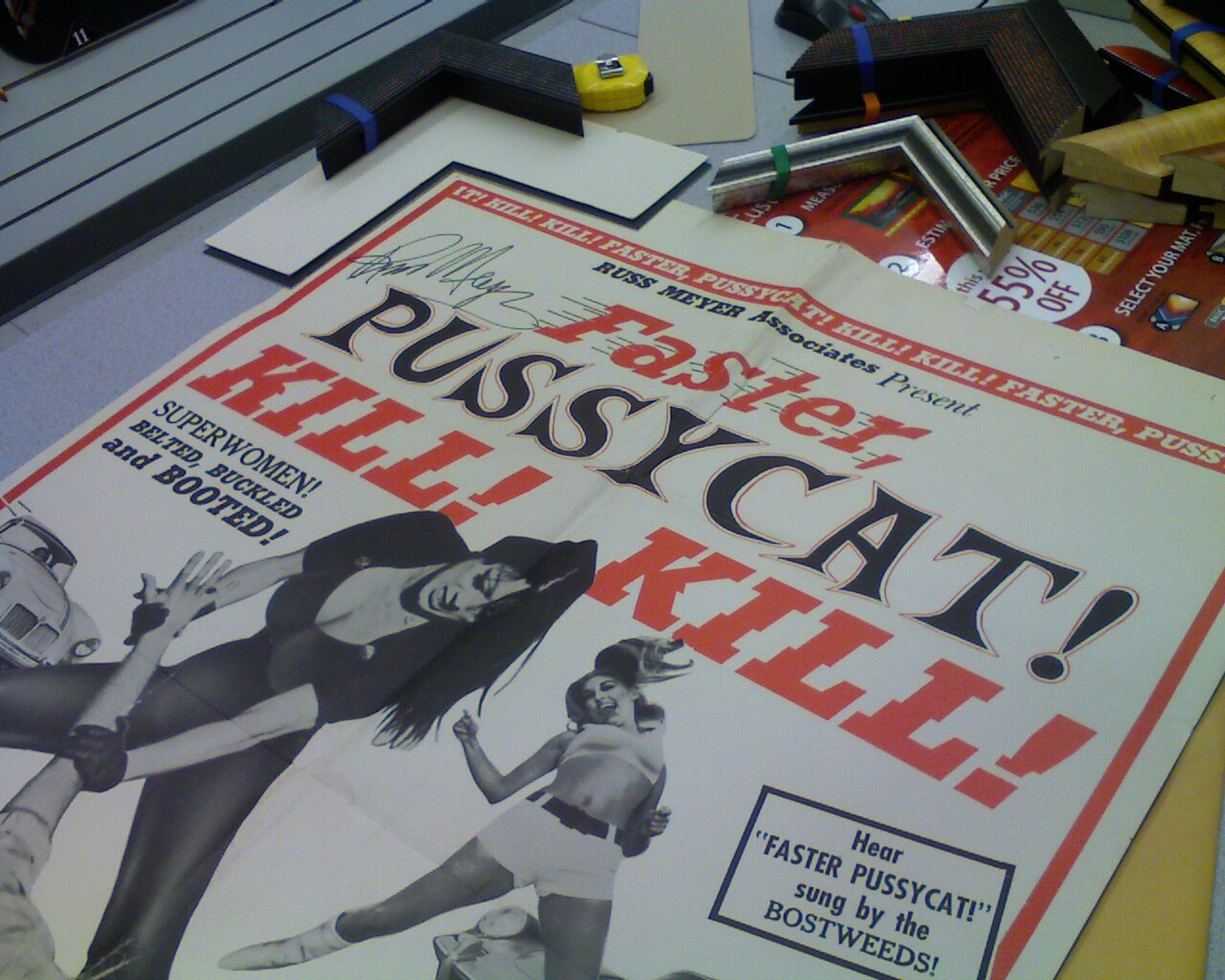
His best-known titles include Faster, Pussycat! Kill! Kill! (1965), Beyond the Valley of the Dolls (1970), Vixen! (1968), and Supervixens (1975). These movies blend over-the-top humor with satirical commentary and became staples of cult cinema.
What made Russ Meyer's filmmaking style unique?
Meyer was notable for single-handedly controlling every aspect of production—from script to camera to final cut—giving him complete creative authority. His films are characterized by exaggerated camp sensibility, sharp social satire, and a deliberate embrace of absurdity rather than straightforward realism.
When was Russ Meyer born and when did he pass away?
He was born on March 21, 1922, in the United States, and died on September 18, 2004. His career spanned several decades, with his most iconic work concentrated in the mid-1960s through the mid-1970s.
Why is Russ Meyer considered important in comedy and film history?
Meyer carved out a distinctive niche by turning the sexploitation genre into a vehicle for wit, parody, and subversive humor rather than mere titillation. His cult following endures because his work rewards repeat viewings and influenced later filmmakers who value irreverent, auteur-driven comedy.
More in Comedy Legends 25-32
Elsewhere in the Comedy Legends universe
Spotted an error? Know more?
This is a living reference — every entry is fact-audited, and reader corrections feed straight into our audit queue. Suggest an edit · See this site's audit record