
Peter Sellers
English actor and comedian known for The Goon Show and Pink Panther.

via Wikipedia: Peter Sellers on stage, radio, screen and record · see source
English actor and comedian Peter Sellers (1925–1980) performed in many genres of light entertainment, including film, radio and theatre. He appeared in the BBC Radio comedy series The Goon Show, recorded a number of hit comic songs and became known internationally through his many film characterisations, among them Chief Inspector Clouseau in The Pink Panther film series. English filmmakers the Boulting brothers described Sellers as "the greatest comic genius this country has produced since Charles Chaplin".
- born
- 1925
- died
- 1980
- field
- Actor, comedian
- nationality
- English
- known_for
- The Goon Show, The Pink Panther series, Dr. Strangelove, Being There
Verified Timeline
Lore & Background
Sellers made his radio debut on ShowTime in 1948, followed by appearances in Ray's a Laugh, Starlight Hour, The Gang Show, Henry Hall's Guest Night and It's Fine to Be Young. Along with Spike Milligan, Harry Secombe and Michael Bentine, he took part in the radio series The Goon Show (1951–60). One newspaper described it as "probably the most influential comedy show of all time". For Sellers, the BBC considers it had the effect of launching his career "on the road to stardom". His stage appearances were few, largely because he had been unhappy with the touring he had done as a child with his family. During his career, he also released a number of albums containing sketches and comic songs; the songs were undertaken in a variety of comic characters. Sellers's versatility enabled him to portray a wide range of comic characters using different accents and guises, and he would often assume multiple roles within the same film, frequently with contrasting temperaments and styles. A feature of the characterisations undertaken by Sellers is that, regardless of how clumsy or idiotic they are, he ensured that they always retained their dignity. Starting in the 1950s, Sellers appeared in over fifty films, including I'm All Right Jack, Dr. Strangelove, Lolita, Being There and the Pink Panther series. At the peak of his career, he was one of the most popular stars at the British box office: third in most popular films in 1962, and second in 1963. Sellers was nominated three times for an Academy Award, twice for the Academy Award for Best Actor. Turner Classic Movies calls Sellers "one of the most accomplished comic actors of the late 20th century". In 2005, Channel 4 conducted a survey of modern-day comedians, who ranked Sellers as the 14th most influential comedian of all time.
Reader's Guide
At the start of his career, Sellers also performed acts in a number of variety shows in various parts of Britain; his wartime service with the Gang Shows of Ralph Reader saw him perform in India, Ceylon and Burma. Throughout his career, Sellers made a number of television appearances, in character roles and for interviews and advertisements. His filmography includes over fifty films from the 1950s onward. The Boulting brothers described Sellers as "the greatest comic genius this country has produced since Charles Chaplin". Sellers's versatility enabled him to portray a wide range of comic characters using different accents and guises, and he would often assume multiple roles within the same film, frequently with contrasting temperaments and styles. A feature of the characterisations undertaken by Sellers is that, regardless of how clumsy or idiotic they are, he ensured that they always retained their dignity.
Did You Know?
- Sellers made his radio debut on ShowTime in 1948.
- One newspaper described The Goon Show as 'probably the most influential comedy show of all time'.
- Sellers was third in most popular films in 1962, and second in 1963 at the British box office.
- He was nominated three times for an Academy Award, twice for Best Actor.
- In 2005, Channel 4 ranked Sellers as the 14th most influential comedian of all time.
The Radio Years That Forged a Star
Peter Sellers first stepped into a recording booth in 1948, when he made his radio debut on the BBC programme ShowTime. From that early appearance, he quickly became a fixture on British airwaves, lending his voice to a string of popular shows including Ray's a Laugh, Starlight Hour, The Gang Show, Henry Hall's Guest Night, and It's Fine to Be Young. He continued to take supporting roles in radio programmes well into the 1970s, showing a remarkable commitment to the medium across decades. The defining chapter of his broadcasting life arrived in 1951 with The Goon Show, a BBC Radio comedy series he shared with Spike Milligan, Harry Secombe, and Michael Bentine. Running until 1960, the programme became a cultural phenomenon. One newspaper went so far as to call it "probably the most influential comedy show of all time," while the BBC itself credits the series with launching Sellers "on the road to stardom." For an actor still building his public identity, those nine years of nightly absurdity proved to be the crucible in which his reputation was forged.
A Chameleon on the Silver Screen
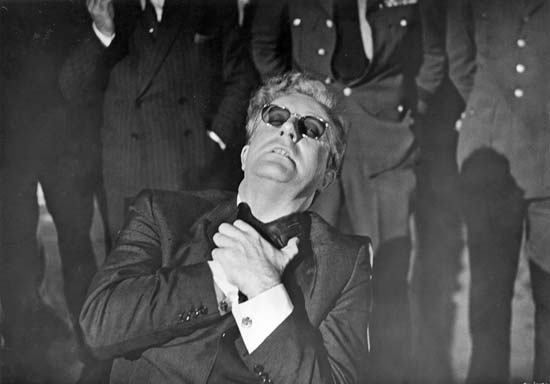
Starting in the 1950s, Sellers committed himself to cinema with an output that exceeded fifty features over the following decades. His filmography reads like a tour of contrasting genres and tones: the political satire of Dr. Strangelove, the literary adaptation of Lolita, the working-class comedy of I'm All Right Jack, the philosophical fable of Being There, and the slapstick iconography of the Pink Panther series, in which he embodied Chief Inspector Clouseau. What unified these wildly different roles was his extraordinary versatility. He could shift accents, guises, and temperaments at will, and he frequently assumed multiple characters within a single picture, each with a distinct personality and manner. Yet beneath the physical comedy and the absurdity, Sellers insisted on something rarer: dignity. No matter how clumsy or foolish his creations appeared on screen, he ensured they carried themselves with a quiet self-respect. This principle gave his work a warmth and intelligence that set it apart from mere farce. The Boulting brothers, two of Britain's most respected filmmakers, summed up his achievement by calling him "the greatest comic genius this country has produced since Charles Chaplin."
Box Office King and Critical Legacy
At the height of his career in the early 1960s, Sellers was not merely a well-liked performer but a genuine box-office force in Britain. In 1962 he ranked third among the most popular film stars at the British box office, and the following year he climbed to second place. That level of commercial dominance, sustained across multiple genres, underscored how broadly his appeal reached beyond any single type of audience. His critical standing matched his popular success. Over the course of his career, Sellers received three Academy Award nominations, two of them in the Best Actor category, a testament to the range and seriousness his work commanded even within the comedy register. Turner Classic Movies has since described him as "one of the most accomplished comic actors of the late 20th century." In 2005, Channel 4 commissioned a survey of modern-day comedians, and those peers ranked Sellers as the fourteenth most influential comedian of all time. His career, spanning from his 1948 radio debut until his death in 1980, left a mark that continues to resonate across generations of performers and audiences alike.
Beyond the Screen: Song, Stage, and a Restless Spirit
Although Sellers is best remembered for his film and radio work, his creative output extended well beyond the screen. He recorded a substantial discography of albums, EPs, singles, and compilations, many of them filled with sketches and comic songs performed in a rotating cast of characters, each with its own distinct voice and persona. He also made numerous television appearances, stepping into character roles, sitting for interviews, and even lending his name and face to advertisements. The stage, however, remained a place he largely avoided. His childhood had been spent touring with his family in variety shows across Britain, and those early years left him with a deep unhappiness about live performance. Even so, his wartime service with the Gang Shows of Ralph Reader took him to India, Ceylon, and Burma, where he performed in a different context entirely. This early exposure to diverse audiences and settings may have contributed to the linguistic and cultural range he would later bring to his character work. His career, spanning from 1948 to his death in 1980, was a testament to a restless creative spirit that refused to be confined to a single medium.
Gallery

Frequently Asked Questions
Who is Peter Sellers?
Peter Sellers was a British actor and comedian born Richard Henry Sellers on 8 September 1925. He rose to fame through radio comedy before becoming a global movie star, and he passed away on 24 July 1980.
What are Peter Sellers's most iconic roles?
He is best remembered for playing the bumbling Chief Inspector Clouseau across the Pink Panther films, as well as memorable parts in Dr. Strangelove and Being There. His early breakthrough came as a cast member on the BBC Radio hit The Goon Show.
What was The Goon Show and why did it matter to Sellers?
The Goon Show was a BBC Radio comedy series in the 1950s where Sellers performed multiple eccentric characters and voices. It was the project that first put him on the map and established his reputation as a versatile, fast-talking comedic talent.
Why is Peter Sellers considered a comedy legend?
Sellers blended rapid-fire verbal wit, physical slapstick, and sharp character work in a way that influenced generations of performers. His ability to shift between deadpan absurdity and high-energy farce made him a defining figure of mid-century British and Hollywood comedy.
How did Peter Sellers's career and life end?
Sellers continued working into the late 1970s, appearing in films like Being There (1979) before his death on 24 July 1980 at the age of 54. His passing cut short what many fans and critics felt was still a productive and evolving career.
More in Comedy Legends 1-24
Elsewhere in the Comedy Legends universe
Spotted an error? Know more?
This is a living reference — every entry is fact-audited, and reader corrections feed straight into our audit queue. Suggest an edit · See this site's audit record