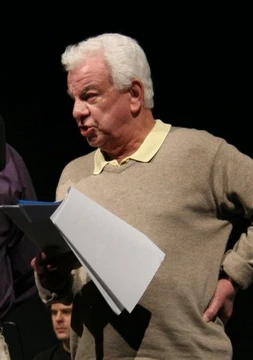
Rodney Dangerfield
Self-deprecating comedian known for his 'no respect' catchphrase.

Rodney Dangerfield (born Jacob Cohen; November 22, 1921 – October 5, 2004) was an American stand-up comedian, actor, screenwriter, and producer. He was known for his self-deprecating one-liner humor, his catchphrase "I get no respect!", and his monologues on that theme. His breakout film role came as a boorish nouveau riche golfer in the ensemble sports comedy film Caddyshack (1980), and he subsequently starred in a string of comedy films such as Easy Money (1983), Back to School (1986), Rover Dangerfield (1991), Ladybugs (1992), and Meet Wally Sparks (1997). He took a rare dramatic role as an abusive father in Oliver Stone's satirical crime film Natural Born Killers (1994).
- born
- November 22, 1921, Long Island, Babylon, New York
Verified Timeline
Lore & Background
Rodney Dangerfield was born Jacob Cohen on Long Island, Babylon, New York, on November 22, 1921, to Jewish parents Dorothy "Dotty" Teitelbaum and vaudevillian performer Phillip Cohen, whose stage name was Phil Roy. His mother was born in Hungary. His father was rarely home; his son normally saw him only twice a year. Late in life, Cohen begged for, and received, his son's forgiveness. Cohen's mother was reportedly emotionally distant for most of his childhood and did not show signs of affection towards her son. In an interview with Howard Stern on May 25, 2004, Dangerfield told Stern that he had been molested by a man in his neighborhood. The man would pay Rodney a nickel and kiss him for five minutes. After Cohen's father abandoned the family, his mother moved him and his sister to Kew Gardens, Queens, where Dangerfield attended Richmond Hill High School, graduating in 1939. To support himself and his family, he delivered groceries and sold newspapers and ice cream at the beach. At the age of 15, he began to write for stand-up comedians while performing at the Nevele, a former resort in Ellenville, New York. Then, at the age of 19 he legally changed his name to Jack Roy. He struggled financially for nine years, at one point performing as a singing waiter until he was fired, before taking a job selling aluminum siding in the mid-1950s to support his wife and family. He later quipped he was so little known that when he gave up show business, "I was the only one who knew I quit." In the early 1960s, he started reviving his career as an entertainer. Still working as a salesman by day, he returned to the stage, performing at hotels in the Catskill Mountains, but still finding minimal success. He fell into debt, about $20,000 by his own estimate and could not get booked. Dangerfield came to realize that what he lacked was an "image," a well-defined on-stage persona that audiences could relate to. During Roy's comeback bid, he was scheduled to play the Inwood Lounge in Manhattan. Wanting to disguise himself from the longtime patrons who might have remembered him from the 1940s, Roy asked club owner George McFadden to change his name. "He came up with Rodney Dangerfield," the comedian said. "I don't know where it came from." McFadden may have taken it from The Jack Benny Program on NBC radio, which had first used "Rodney Dangerfield" as a character's name in 1941.
Reader's Guide
Rodney Dangerfield reached national prominence appearing on The Ed Sullivan Show in March 1967. He soon began headlining shows in Las Vegas and continued making frequent appearances on The Ed Sullivan Show. He also became a regular on The Dean Martin Show and appeared on The Tonight Show more than 70 times. In 1969, Dangerfield teamed up with Anthony Bevacqua to build the Dangerfield's comedy club in New York City, a venue where he could perform on a regular basis without having to constantly travel. In 1978, The Harvard Crimson described a show by Dangerfield at Dangerfield's, prior to him being Harvard Class Day Speaker. The club remained in continuous operation until October 14, 2020. Dangerfield's was the venue for several HBO comedy specials starring stand-up comics such as Jerry Seinfeld, Jim Carrey, Tim Allen, Roseanne Barr, Robert Townsend, Jeff Foxworthy, Sam Kinison, Bill Hicks, Rita Rudner, Andrew Dice Clay, Louie Anderson, Dom Irrera, and Bob Saget. Dangerfield's re-opened in January 2024 as Rodney's Comedy Club. His 1980 comedy album No Respect won a Grammy Award for Best Comedy Album. One of his TV specials featured a musical number, "Rappin' Rodney", which appeared on his 1983 follow-up album, Rappin' Rodney. In December 1983, the "Rappin' Rodney" single became one of the first Hot 100 rap records, and the associated video was an early MTV hit. Over his career he released seven comedy albums. He received a star on the Hollywood Walk of Fame in 2002. Health troubles curtailed his output through the early 2000s before his death in 2004, following a month in a coma due to complications from heart valve surgery.
Did You Know?
- Dangerfield legally changed his name to Jack Roy at age 19, then later adopted the stage name Rodney Dangerfield, which club owner George McFadden came up with.
- In an interview with Howard Stern on May 25, 2004, Dangerfield revealed he had been molested as a child by a man who paid him a nickel for five-minute kisses.
- His 1983 single 'Rappin' Rodney' was one of the first Hot 100 rap records, and its video was an early MTV hit featuring cameos by Don Novello and Pat Benatar.
- Dangerfield was the first celebrity to personally own a website and create content for it, launching his site in March 1995.
- He played an abusive father in Oliver Stone's Natural Born Killers (1994), writing or rewriting all of his own lines for that scene.
Early Life & Formative Struggles
Jacob Cohen arrived on November 22, 1921, in Babylon, Long Island, the son of Dorothy "Dotty" Teitelbaum, a Hungarian-born woman, and Phillip Cohen, a vaudevillian who performed under the name Phil Roy. The family's domestic life was fractured from the start: Phillip was rarely present, and young Jacob saw him only about twice a year. His mother, by his later account, remained emotionally distant and seldom displayed affection. In a 2004 interview with Howard Stern, Dangerfield disclosed that a man in his neighborhood had molested him as a child, paying him a nickel for five minutes of unwanted attention. After his father abandoned the family, his mother relocated him and his sister to Kew Gardens, Queens, where he graduated from Richmond Hill High School in 1939. To help support the household, the teenager delivered groceries and sold newspapers and ice cream at the beach. By fifteen, he was already writing material for stand-up comedians at the Nevele resort in Ellenville, New York. At nineteen, he legally changed his name to Jack Roy, setting the stage for a long, grinding climb toward recognition.
Forging a Persona & Breaking Through
For nearly a decade after turning professional, Jack Roy endured near-total obscurity. He performed as a singing waiter before being fired, then sold aluminum siding in the mid-1950s to support his family. He estimated his debts at around twenty thousand dollars and could not secure bookings, joking that he played one club so remote his set was reviewed in Field & Stream. The breakthrough came when he realized audiences needed a clear, relatable character. He built a persona defined by perpetual misfortune and a total absence of deference from the world. In the early 1960s, still working as a salesman by day, he revived his stage career at Catskill Mountain hotels. When booked at the Inwood Lounge in Manhattan, he asked owner George McFadden to give him a new name so longtime patrons would not recognize him. McFadden suggested "Rodney Dangerfield," a name that had appeared on The Jack Benny Program radio show as early as 1941. His March 1967 appearance on The Ed Sullivan Show catapulted him to national visibility. He soon headlined Las Vegas while becoming a fixture on The Dean Martin Show and The Tonight Show, where he performed more than seventy times.
Film Career & Versatility
Dangerfield's path to the screen was gradual. His earliest film credit was a small part in The Projectionist (1971), an obscure title that gave audiences little reason to remember him. True recognition arrived in 1980 with Caddyshack, the ensemble sports comedy in which he played a boorish nouveau riche golfer. That role opened the door to a steady stream of lead comedy vehicles: Easy Money (1983), Back to School (1986), Rover Dangerfield (1991), Ladybugs (1992), and Meet Wally Sparks (1997). Each film leaned on his trademark self-deprecating one-liners and the central theme of a man perpetually overlooked or disrespected by those around him. Yet Dangerfield proved he could step outside the comic mold as well. In Oliver Stone's 1994 satirical crime film Natural Born Killers, he took on a rare dramatic role as an abusive father, a performance that demonstrated a darker, more menacing register than his usual material. Across these projects, his screenwriting and producing credits further underscored his creative control over the material he brought to audiences. The breadth of his film work, from broad ensemble comedy to serious drama, remains a testament to his range as a performer who refused to be confined to a single lane.
Legacy, Recognition & Final Chapter
Dangerfield's contributions to comedy earned him formal recognition across multiple disciplines. His 1980 album No Respect took home the Grammy Award for Best Comedy Album, one of seven comedy records he released over his career. In 1978, he was invited to deliver the keynote address at Harvard University's Class Day ceremony, a rare honor for a stand-up comic. His signature catchphrase, "I get no respect!", transcended his own act and was adopted as a line in the 1976 animated series Jabberjaw. In 2002, he received a star on the Hollywood Walk of Fame. His 1969 partnership with Anthony Bevacqua to open Dangerfield's comedy club in New York City created a permanent home for his performances and became a launchpad for HBO specials by comedians including Jerry Seinfeld, Jim Carrey, and Bill Hicks. The venue operated continuously until October 2020 and was relaunched in January 2024 as Rodney's Comedy Club. Dangerfield's later years were marked by declining health. Complications from heart valve surgery sent him into a month-long coma, and he died on October 5, 2004.
Frequently Asked Questions
Who is Rodney Dangerfield?
He was an American stand-up comedian, actor, and producer who became one of the most iconic comedy voices of the twentieth century. Born Jacob Cohen in 1921 in Queens, New York, he built his career on sharp one-liners and a deeply self-mocking persona.
What is Rodney Dangerfield's signature catchphrase?
His most recognizable line is "I get no respect!" which served as the anchor for nearly every routine he performed. The phrase encapsulated his entire comedic identity as a man perpetually overlooked by family, friends, and strangers alike.
What was Rodney Dangerfield's breakout film role?
He played a brash, nouveau riche golfer in the 1980 ensemble comedy Caddyshack. That part catapulted him from club circuits into a steady stream of leading-man comedy films.
Which movies did Rodney Dangerfield star in?
After Caddyshack, he headlined a run of comedies including Easy Money (1983), Back to School (1986), Rover Dangerfield (1991), Ladybugs (1992), and Meet Wally Sparks (1997). Each film leaned on his grumpy, underappreciated everyman character.
When and where was Rodney Dangerfield born?
He was born Jacob Cohen on November 22, 1921, in Woodhaven, Queens, New York. He later adopted the stage name Rodney Dangerfield, which eventually became his legal identity.
More in Comedy Legends 1-24
Elsewhere in the Comedy Legends universe
Spotted an error? Know more?
This is a living reference — every entry is fact-audited, and reader corrections feed straight into our audit queue. Suggest an edit · See this site's audit record